



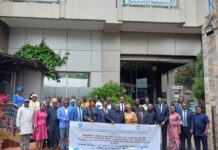
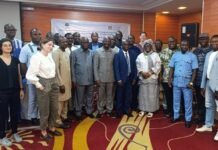
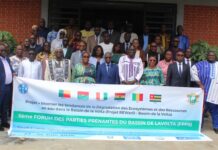


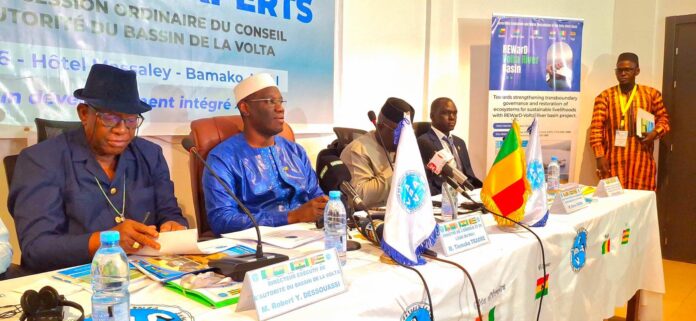
Bamako, October 12, 2026 – The city of Bamako is currently hosting the proceedings of the Technical Committee of Experts (TCE), marking the launch of preparations for the 8th Ordinary Session of the Council of Ministers of the Volta Basin Authority (VBA). This strategic gathering brings together experts from the National Focal Structures (NFS) of Member States, alongside technical and financial partners, with a shared objective: revitalizing regional cooperation for the concerted and sustainable management of this shared resource.
The opening ceremony was chaired by Mr. Tiémoko TRAORÉ, Minister of Energy and Water, in the presence of Mr. Robert DESSOUASSI, Executive Director of the VBA, the National Focal Structure (NFS) Coordinator and National Director of Hydraulics, Mr. Sékou DIARRA, as well as the Regional Coordinator of Natural Resource Users of the Volta Basin. This gathering represents an essential preparatory milestone ahead of the 8th Ordinary Session of the VBA Council of Ministers. Confronted with financial constraints and the impacts of climate change, the Volta Basin Authority intends to consolidate its achievements and bolster cooperation among its Member States.
A Strengthened Cooperation Framework Facing Climate and Socio-Economic Challenges
Nearly two decades after its establishment, the VBA plays a pivotal role in regional integration and the socio-economic development of the riparian nations (Benin, Burkina Faso, Côte d’Ivoire, Ghana, Mali, Togo). Spanning more than 398,000 square kilometers, the Volta Basin serves as a vital lifeline for millions of citizens whose livelihoods depend directly on agriculture, livestock farming, fisheries, and energy generation.
However, institutional interventions have evolved amid major administrative, financial, and environmental hurdles, exacerbated by the impacts of climate change and mounting pressure on water resources. The convening of this long-awaited 8th Ordinary Session—following several years without statutory meetings of the Council of Ministers—attests to the firm political determination of Member States to fully revive consultation mechanisms and regional solidarity.
Key Working Files to Consolidate Institutional Governance
Over these four days of deliberations, experts are examining major administrative and technical dossiers, notably:
- The organization’s activity reports covering the period from May 2019 to August 2026.
- Financial statements and external audit reports.
- The 2026–2028 biennial work plan.
- Studies and draft resolutions aimed at enhancing governance, financial viability, and the operational effectiveness of the VBA Executive Directorate in the face of cash-flow shortages and arrears in statutory contributions.
The discussions also highlight major milestones achieved by the organization, including the operationalization of National Focal Structures, the rollout of the early warning system for flood and drought forecasting, and the establishment of both the regional network of parliamentarians and coordination platforms for basin water users.
Information and Data at the Heart of Decision-Making
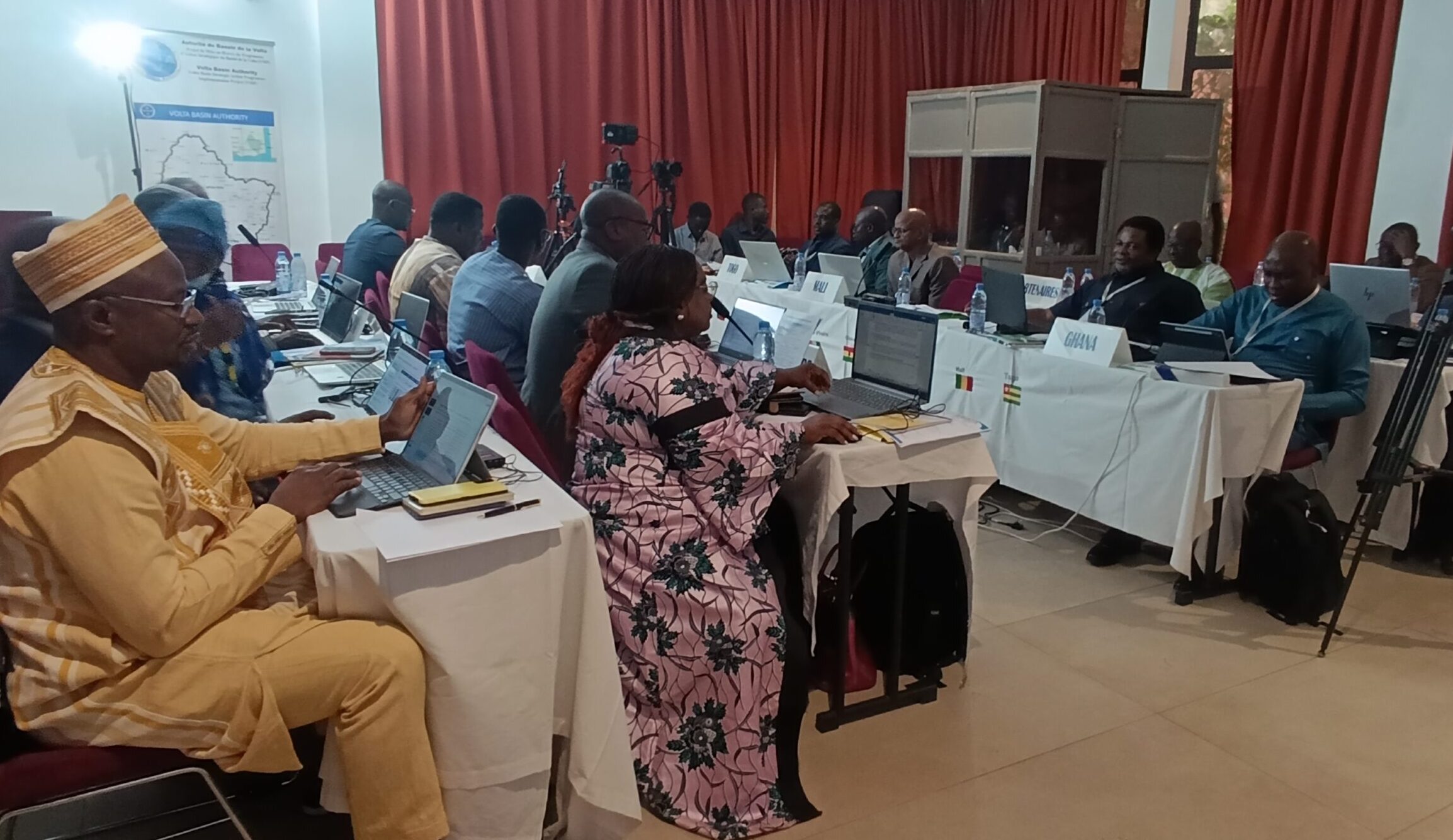 Beyond institutional aspects, special emphasis has been placed on the critical importance of collecting, structuring, and rapidly disseminating data (particularly meteorological, agricultural, and economic data). Such reliable information serves as a strategic decision-support tool to anticipate climate hazards, alleviate concerns among riparian communities, and efficiently guide agricultural production and natural resource management.
The recommendations resulting from these technical deliberations will be submitted for high-level consideration by the Council of Ministers to forge a new momentum founded on mutual trust, managerial rigor, and operational delivery.
Mali’s Minister of Energy and Water called on experts to demonstrate rigor, objectivity, and realism in order to formulate prioritized, actionable, and forward-looking recommendations. The time has passed for isolated commitments; the focus must now be on concerted action, aligned efforts, and accelerated delivery in service of the basin’s populations.
This preparatory momentum paves the way for strong policy decisions to be adopted by the Council of Ministers, reinforcing the shared vision of turning the Volta Basin into an engine of inclusive prosperity, stability, and climate resilience.
