



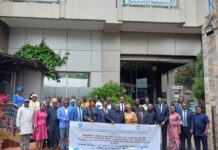
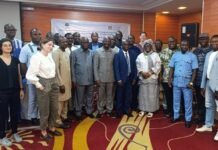
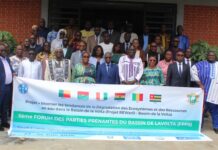
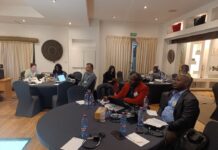

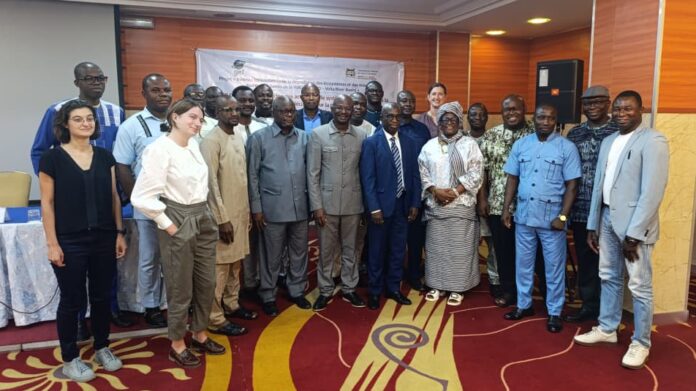
From August 18 to 20, 2026, the conference room of the Royal Hotel in Cotonou, Benin, hosted the regional training workshop for strategic stakeholders in the Volta Basin. Organized in a hybrid format (in-person and online), this workshop is directly linked to the implementation of the project “Reversing the Trends of Ecosystem Degradation and…” water resources in the Volta Basin” ( REWarD – Volta River Basin) . Funded by the Global Environment Facility (GEF), the project is jointly implemented by the Volta Basin Authority (VBA) and the Global Water Partnership in West Africa (GWP-WA), with technical and institutional support from the United Nations Environment Programme (UNEP), IUCN and the UNEP-DHI Centre.
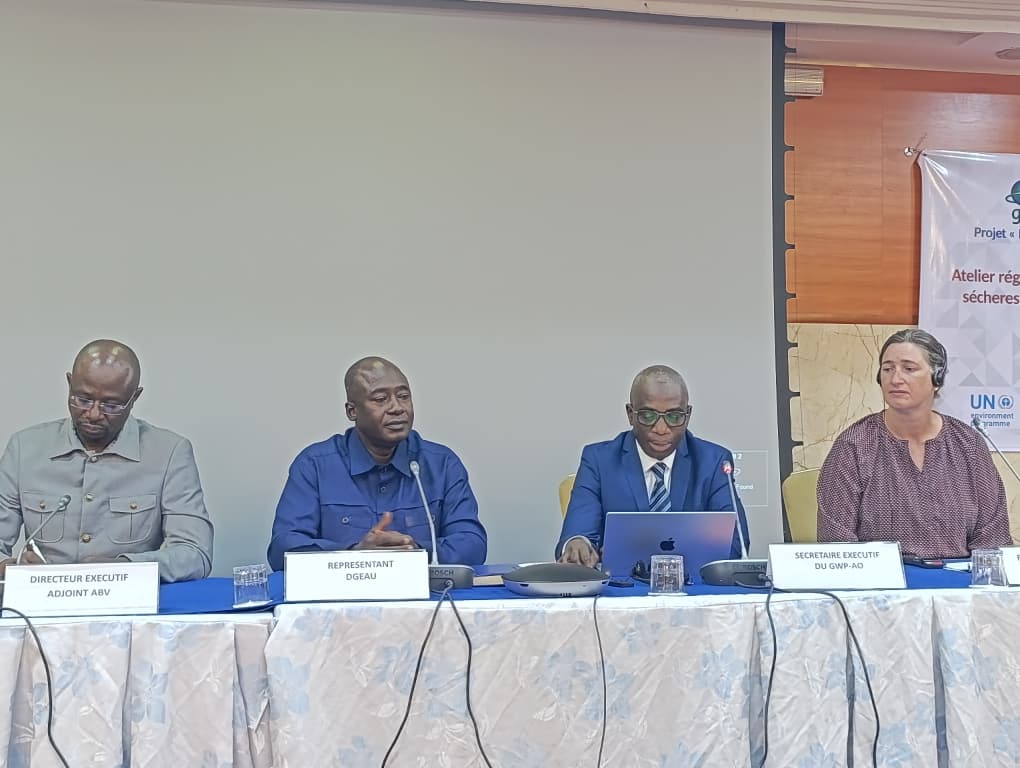
At the opening ceremony, presided over by Mr. Batia N’DA Eleuthère, representing the Director General of Water for Benin, emphasis was placed on the guiding principle of this initiative: “Anticipation is better than reactive .” For Mr. Amadou Lamine NDIAYE, Executive Secretary of GWP-AO, the Early Warning System should enable a shift from a reactive to a proactive prevention approach, giving decision-makers time to adjust water resource allocation, adapt agricultural calendars, and protect livelihoods. As Mr. Dibi MILOGO, Deputy Executive Director of the VBA, pointed out, the complexity of cross-border challenges requires enhanced coordination based on reliable and shared scientific data because uncontrolled human activities, deforestation, rampant urbanization and the recurrence of extreme climatic events (severe floods and prolonged droughts) threaten the sustainability of water resources and the food security of populations.
The Early Warning System for Drought (SAPS) developed within the framework of the REWarD – Volta River Basin project is not limited to a computer platform, but constitutes a complete operational chain based on five essential pillars:
- In-depth knowledge of risks: Mapping of local vulnerabilities and assessment of socio-economic impacts;
- Monitoring and forecasting: Real-time tracking of meteorological, hydrological and agricultural indicators;
- Production and analysis of information: Centralized processing of data by the Volta hydrological model;
- Rapid dissemination of alerts: Preparation of monthly bulletins efficiently transmitted to authorities and decision-makers;
- Population response capacity: Implementation of prevention and adaptation measures at the community level.
Following three days of fruitful discussions between forecasters from the six countries, the ABV, the GWP-AO and technical experts, several key recommendations were adopted:
- Regarding the UNEP-DHI partner: Organize advanced training sessions to deepen technical mastery of the OAD tool;
- For member countries (Benin, Burkina Faso, Côte d’Ivoire, Ghana, Mali, Togo): Ensure the continuous supply of national data to guarantee the constant updating of the platform;
- To the Volta Basin Authority (VBA): Organize outreach and awareness workshops for institutional and decision-making appropriation of the tool in each member state;
